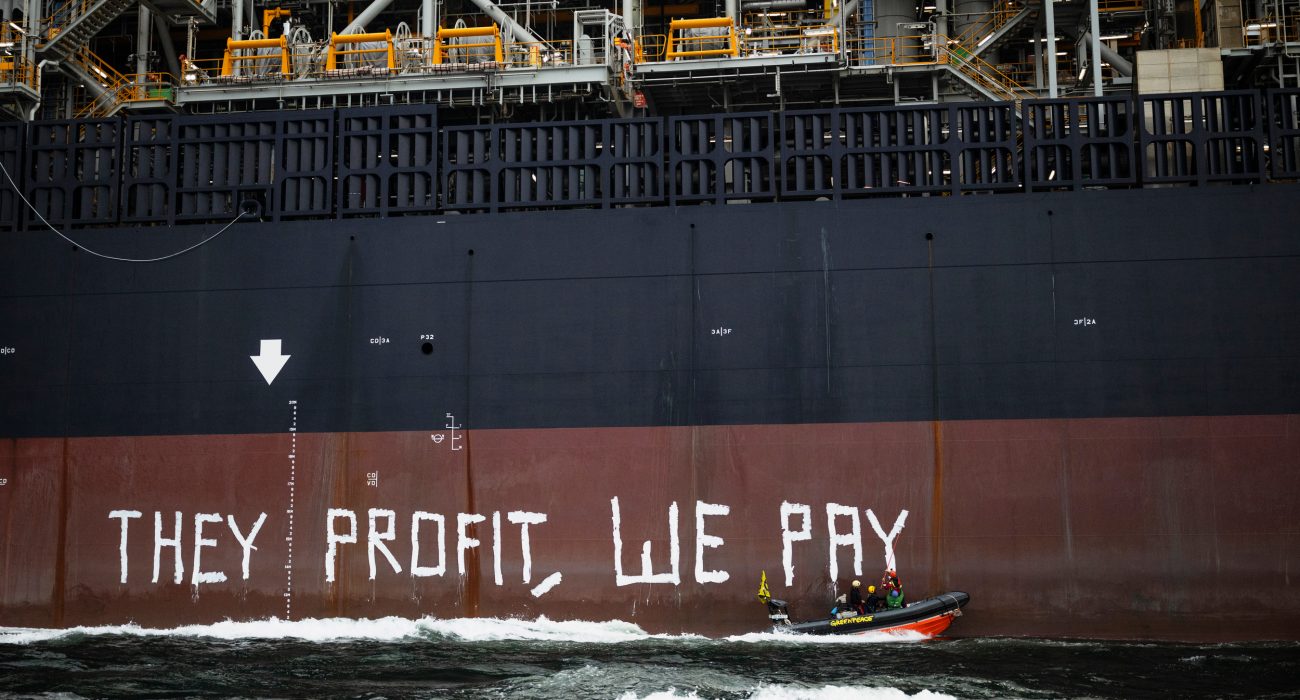
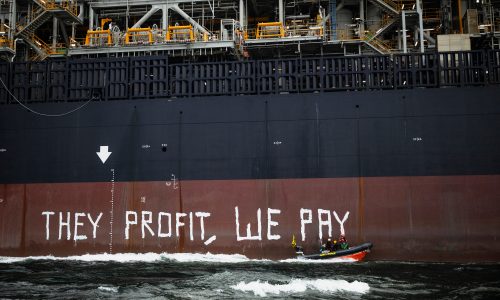
Greenpeace activists reach an FPSO and paint a slogan on its hull during a protest targeting the Rosebank oil field project. File photo. Credit: Christian Åslund / Greenpeace.
Greenpeace activists reached a floating production storage and offloading vessel under tow to the United Kingdom and painted a slogan on its hull, escalating protests against the Rosebank oil field and raising safety concerns for offshore operations.
The FPSO had recently departed Namibia, where it stopped for refueling, and is being towed toward UK waters ahead of deployment at the Rosebank field west of Shetland. Activists approached the vessel using small boats and gained access during transit.
Direct boarding highlights offshore safety risks
The activists used rigid hulled inflatable boats and kayaks to reach the vessel and marked the hull with the slogan “they profit, we pay”. Additional protest boats surrounded the FPSO while banners opposing the project were displayed.
Boarding activity during tow operations introduces safety risks. FPSOs require controlled navigation, especially when under tow across long distances. Close proximity of small craft can affect maneuverability and crew response.
Second protest intensifies pressure on project
The action marks the second Greenpeace protest targeting the same vessel within days. Campaigners are increasing pressure on the Rosebank development, which remains under political and regulatory scrutiny in the United Kingdom.
The project is one of the largest undeveloped oil fields on the UK Continental Shelf and has faced sustained opposition from environmental groups.
Transit phase exposes operational vulnerability
During transit, FPSOs are more exposed than fixed offshore installations. The vessel remains en route to its final location, increasing the risk of external interference.
Operators must manage both navigational safety and external threats while maintaining project timelines.
Wider implications for offshore operations
The incident highlights how activist actions can disrupt offshore logistics. Boarding, close approach, and protest activity can lead to delays, increased monitoring, and higher operational risk.
For the maritime sector, the case underscores the need for enhanced risk management during vessel movements linked to major offshore energy projects.