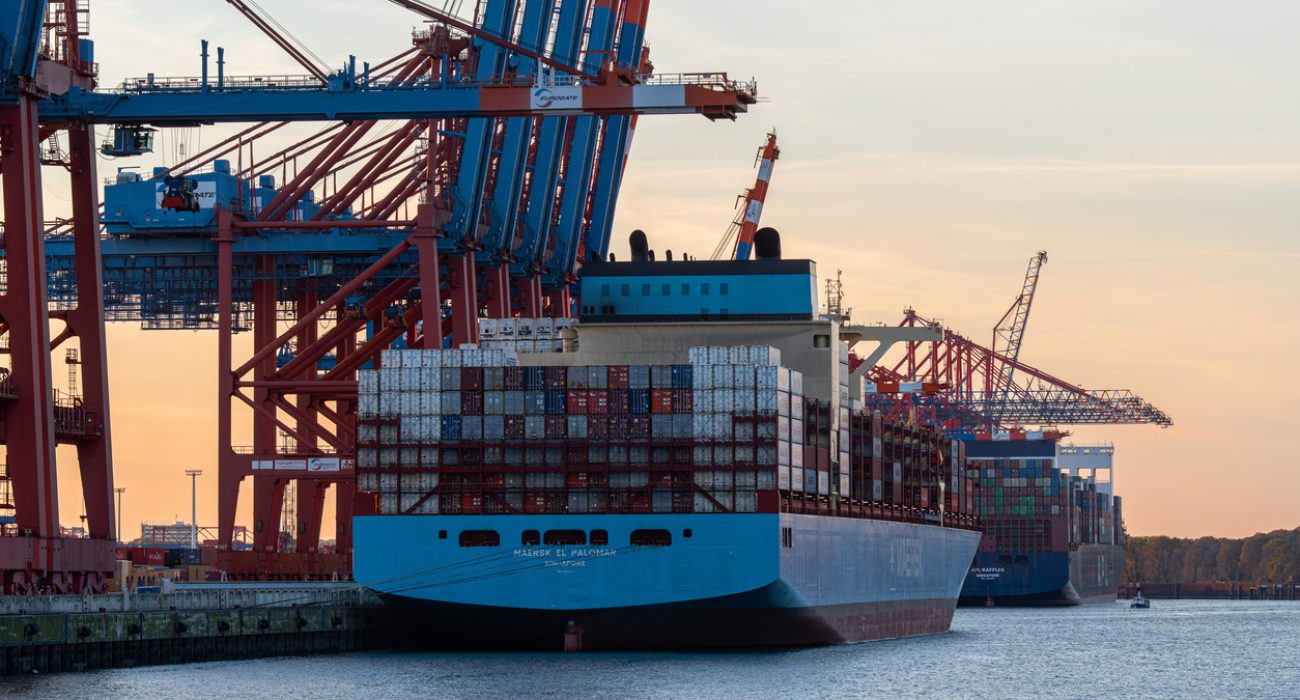
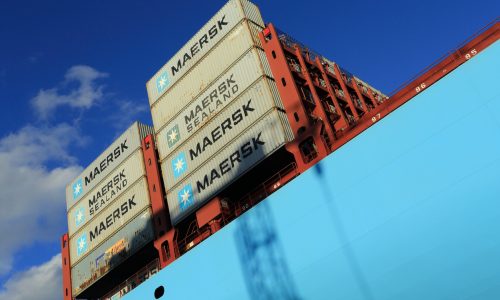
Global container shipping faces renewed disruption after two of the world’s largest carriers paused services through high risk waters near the Middle East. Maersk and Hapag Lloyd have suspended routes as security concerns intensify across one of the most important corridors for global maritime trade.
The decision reflects growing alarm within the shipping industry about threats to commercial vessels operating near the Red Sea and surrounding sea lanes. Ship operators continue to monitor the situation closely as attacks on merchant vessels raise operational risks and insurance costs.
Both carriers confirmed that safety remains the main factor behind the route suspensions. Shipping companies must protect crews, cargo, and vessels when geopolitical tensions increase in critical maritime regions.
Container Shipping Routes Face Growing Uncertainty
The Red Sea corridor plays a central role in international container shipping. It links Asian manufacturing hubs with European consumer markets through the Suez Canal.
Any disruption along this route forces carriers to reconsider voyage planning and network schedules. When security risks rise, operators often divert vessels around the Cape of Good Hope instead of transiting the Suez Canal.
This alternative route significantly increases sailing distance and voyage time. Ships traveling around southern Africa may add thousands of nautical miles to each journey.
The change also raises fuel consumption and operational costs for container shipping lines.
Major Carriers Adjust Operations
Maersk and Hapag Lloyd rank among the largest global container shipping companies. Their network decisions often influence trade flows across major east west shipping routes.
By suspending services through affected areas, the carriers aim to limit exposure to security threats while protecting crews and cargo. However, these adjustments may lead to delays and schedule disruptions for shippers.
Freight markets could also feel the impact if rerouted voyages tighten vessel availability and extend transit times.
Shipping Industry Watches Security Developments
Shipowners, charterers, and cargo interests are closely tracking developments in the region. Maritime security concerns continue to shape operational planning for container shipping networks.
Industry participants remain cautious as geopolitical tensions affect global trade routes. The Red Sea and Suez Canal corridor remain essential for container shipping between Asia and Europe.
If security risks persist, carriers may continue to adjust schedules and routing strategies. These decisions could reshape container shipping flows and affect freight markets across the global maritime sector.