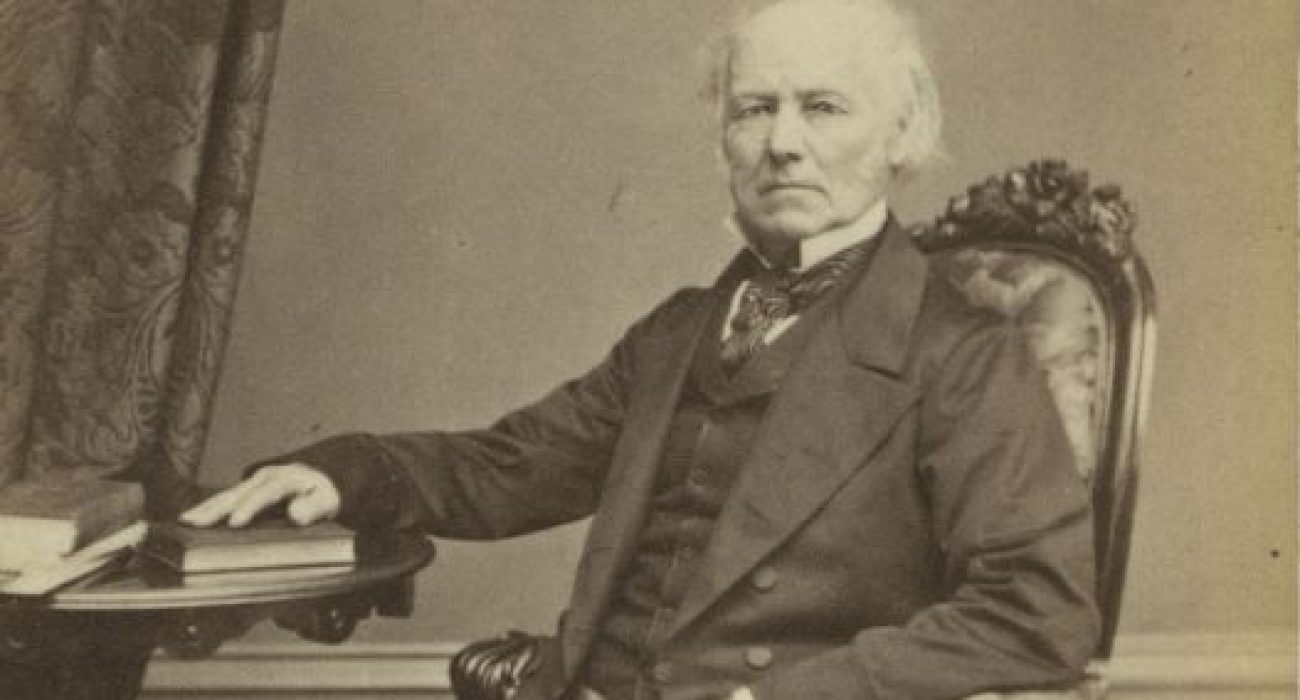
Samuel Cunard is widely regarded as one of the pioneers of modern transatlantic shipping. In the early 19th century, crossings between Europe and North America were dominated by sailing packet ships operating without reliable schedules. Cunard changed that model by helping establish one of the first dependable transatlantic steamship services — a system that would transform maritime trade, communication, and passenger travel.
Born in 1787 in Halifax, Nova Scotia, Samuel Cunard grew up in a maritime trading environment. His father was a Loyalist merchant who had relocated to Canada after the American Revolutionary War. The Cunard family quickly became involved in shipping and commerce, and by the early 1800s Samuel Cunard had already built a successful business in timber, shipping, and banking.
The Birth of Cunard Line
The turning point came in the late 1830s when the British government sought a reliable way to transport mail across the Atlantic. Steam technology was still relatively new for long ocean voyages, and many shipowners doubted that steamships could operate consistently on such routes.
Cunard believed that steam-powered vessels could provide dependable service if managed properly. In 1839, he secured a contract with the British Admiralty to carry Royal Mail between Britain and North America. With financial backing and engineering expertise, Cunard established what would become the Cunard Line, one of the most influential companies in the history of transatlantic shipping.
RMS Britannia and the First Regular Steamship Route
In 1840, Cunard Line launched its first vessel, RMS Britannia, marking a major milestone in maritime transportation. The paddle steamer sailed from Liverpool to Halifax and Boston, demonstrating that scheduled steamship crossings of the Atlantic were not only technically possible but commercially viable.
Unlike many earlier steamship experiments, Cunard’s vessels operated on strict timetables. Reliability became the company’s defining principle. Merchants, governments, and passengers quickly recognized the value of a predictable transatlantic transport service.
Steamships Transform the Atlantic
Throughout the mid-19th century, Cunard Line expanded its fleet and routes. Its steamships carried mail, cargo, and passengers between Europe and North America, strengthening economic links across the Atlantic.
The company also became part of the wider system that supported the great waves of European migration to North America. As steamship technology improved and travel times became more predictable, transatlantic crossings became increasingly accessible to both travelers and migrants.
A Focus on Reliability and Discipline
Samuel Cunard himself was known for his pragmatic management style. Rather than pursuing speed records or technological spectacle, he focused on operational reliability, disciplined ship management, and strong engineering standards.
This approach helped Cunard Line build a reputation for safety and dependability during a period when maritime accidents were still relatively common.
Samuel Cunard’s Lasting Impact on Maritime Transport
The legacy of Samuel Cunard extends far beyond the company that bears his name. By demonstrating that scheduled steamship services could operate consistently across the Atlantic, he helped establish the foundation for modern liner shipping.
Regular transatlantic routes became vital corridors for trade, communication, and passenger travel long before the age of aviation.
When Samuel Cunard died in 1865, the Atlantic Ocean had effectively been transformed from an unpredictable barrier into a structured maritime transport corridor — a change that reshaped global commerce and mobility.