The Deviation That Caused the Grounding
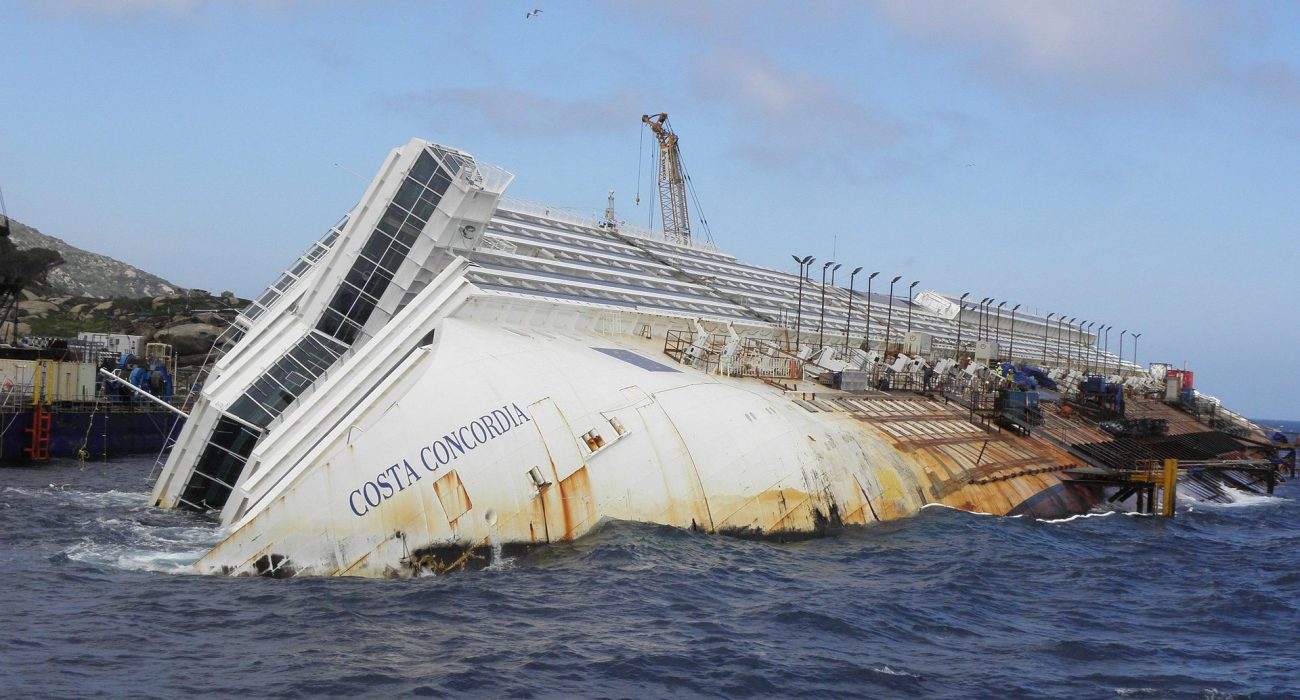
On the evening of January 13, 2012, a luxury cruise meant to celebrate leisure and escape turned into one of the most infamous maritime disasters of the modern era. When the Costa Concordia struck rocks off the coast of Giglio Island, it did more than run aground. It triggered a crisis that reshaped how the cruise industry approaches safety, bridge management, and emergency response.
The Costa Concordia, operated by Costa Cruises, ranked among the largest and most luxurious cruise ships in Europe at the time. Carrying more than 4,200 passengers and crew, the vessel had departed Civitavecchia on a Mediterranean itinerary. Shortly after sunset, the bridge team deviated from the planned route to perform a close coastal sail-past, a maneuver later described as a “salute” to the island.
That decision proved catastrophic.
At 21:45, the ship struck an underwater rock formation, tearing a 53-metre gash in its hull. Seawater flooded the engine room, caused a total blackout, and disabled propulsion. The vessel began listing within minutes.
Blackout, Confusion, and Failed Evacuation
Instead of immediately declaring an emergency, the bridge issued misleading announcements that downplayed the severity of the situation. Alarms sounded late, and crew members delayed mustering passengers.
By the time the master ordered a full evacuation, the list had increased so much that several lifeboats could no longer be launched. Passengers climbed tilted decks in darkness, while crew struggled to manage large crowds without clear command authority.
Investigators later attributed many deaths not to the impact itself, but to delayed evacuation and breakdowns in onboard crisis management.
Thirty-two people lost their lives.
Command Failure on the Bridge
The disaster focused global attention on the ship’s master, Francesco Schettino. He deviated from the voyage plan without operational necessity, ignored bridge team warnings, and abandoned the vessel before evacuation was complete.
An Italian court convicted Schettino in 2015 and sentenced him to 16 years in prison for multiple counts of manslaughter, causing a maritime accident, and abandoning ship.
The official investigation concluded that the casualty resulted from gross human error compounded by a failed safety management culture. Officers did not challenge the master effectively, and the bridge team failed to apply basic principles of Bridge Resource Management.
The vessel breached core requirements of SOLAS Chapter V on voyage planning and the ISM Code on safety management systems.
Regulatory Fallout for the Cruise Industry
The accident forced the cruise sector into its most significant regulatory reset in decades.
The International Maritime Organization introduced new requirements for passenger muster drills, which must now take place before or immediately after departure, rather than at sea. Cruise operators expanded Bridge Resource Management training and tightened internal rules on coastal navigation.
Operators also revised emergency procedures to improve communication between bridge, hotel staff, and evacuation teams. The industry shifted from viewing passenger safety as a compliance issue to treating it as a core operational risk.
The Largest Salvage Operation in History
The salvage of the Costa Concordia became a landmark engineering project. Over two years, international teams executed the largest ship recovery operation ever attempted.
Engineers used a complex parbuckling method to rotate the wreck upright, refloat it, and tow it away for dismantling. The operation cost more than $1.5 billion and required extensive environmental protection measures to prevent fuel and debris from contaminating the surrounding marine reserve.
In 2014, the vessel was finally removed and sent for scrapping, closing the physical chapter of the disaster.
Why Concordia Still Matters
More than a decade later, the Costa Concordia remains a defining case study in maritime safety. It demonstrated that modern ships can fail not because of technology, but because of leadership, culture, and human decision-making.
The industry learned that scale increases risk, informal practices undermine formal systems, and safety management frameworks collapse when authority goes unchallenged.
One deviation from the voyage plan, one failed bridge team, and one delayed evacuation turned a routine cruise into a permanent lesson for global shipping.